
Obeying Authorities Who Are Wrong
Why God Commands Us to Obey Imperfect Authorities
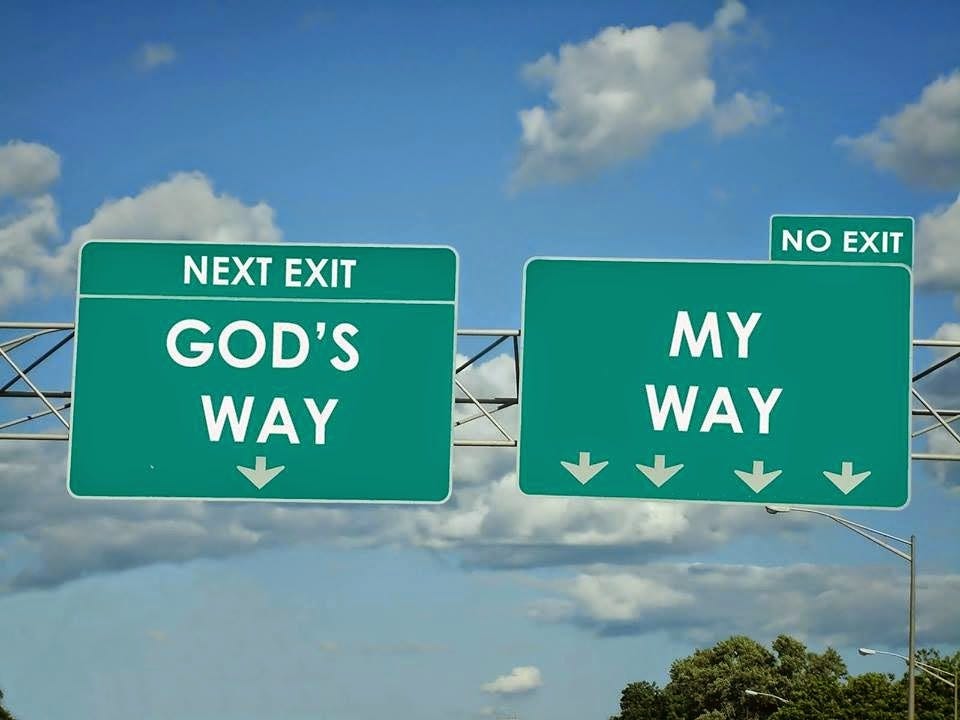
A teenager rolls his eyes at his father and says, “Why should I listen to you? You’ve made plenty of mistakes.”
A wife refuses her husband’s direction because she can point to several bad decisions he made last year.
A church member rejects his bishop because he discovered errors in one of the bishop’s sermons.
A citizen dismisses the laws of his country because politicians are corrupt.
Different situations. Same argument.
“He is wrong about some things, therefore I don’t have to obey him.”
The problem is that this argument collides head-on with the teaching of Scripture. From Genesis to Revelation, God routinely requires us to obey authorities who are imperfect, fallible, and sinful. In fact, if personal perfection were required before obedience became necessary, there would be almost nobody left to obey.
The Bible does not teach that authority belongs only to those who never make mistakes. Rather, it teaches that authority is a gift and arrangement of God. The authority remains real even when the person exercising it is flawed.
Consider how many categories of authority Scripture establishes.
Children are commanded to obey their parents. The Fifth Commandment simply says, “Honor your father and your mother” (Exodus 20:12). Likewise, St. Paul writes, “Children, obey your parents in the Lord: for this is right” (Ephesians 6:1). Neither passage says, “Obey your parents only if they never make mistakes.” Every parent is a sinner. Noah became drunk. Isaac showed favoritism. Jacob made mistakes. David’s family life was filled with turmoil. Yet Scripture never suggests that children become free from obedience whenever they discover faults in their parents.
Wives are commanded to obey their husbands. The apostle Paul gives direct instructions, saying, “teach the young women to be… obedient to their own husbands, that the word of God be not blasphemed” (Titus 2:4–5). Yet husbands often fail to fulfill their own responsibilities. Husbands can be selfish, immature, shortsighted, and mistaken. The possibility of those failures is precisely why Scripture contains so many warnings addressed to husbands. Nevertheless, the command remains for wives to be obedient.
Younger people are instructed to submit to elders. The apostle Peter writes, “Likewise you younger people, submit yourselves to your elders” (1 Peter 5:5). Of course, age does not produce perfection. Every elderly person has blind spots, weaknesses, and areas of ignorance. Some older people are wise. Some are foolish. Most are mixtures of both. Yet Scripture still commands respect and deference toward elders.
Servants are commanded to obey their masters. The apostle Paul writes, “Servants, obey in all things your masters according to the flesh” (Colossians 3:22). The apostle Peter goes even further: “Servants, be submissive to your masters with all fear, not only to the good and gentle, but also to the harsh.” (1 Peter 2:18). The master’s imperfections do not erase the servant’s duty.
Israel was commanded to obey judges and leaders. Some of those judges were righteous. Others eventually fell into serious sins. Yet God still established their offices and expected His people to obey them within their lawful sphere of authority.
Perhaps the most striking example comes from Christ Himself. Speaking about the scribes and Pharisees, He said: “The scribes and the Pharisees sit in Moses’ seat. Therefore whatever they tell you to observe, that observe and do” (Matthew 23:2–3). Yet only moments later Christ condemns their hypocrisy in some of the strongest language found anywhere in the Gospels (Matthew 23:13–33). Their faults were real. Their authority was also real. Christ recognized both facts simultaneously.
The same principle appears in relation to kings and civil rulers. The apostle Paul writes, “Let every soul be subject to the governing authorities” (Romans 13:1). Likewise, the apostle Peter commands Christians, “Therefore submit yourselves to every ordinance of man for the Lord’s sake” (1 Peter 2:13). These instructions were written in the Roman Empire, hardly a government run by saints. The rulers were pagan. Some were cruel. Some persecuted Christians. Yet the apostles still commanded obedience to them in all lawful matters.
Finally, Scripture commands Christians to obey their church leaders. The apostle Paul says, “Obey those who rule over you, and be submissive” (Hebrews 13:17). Yet bishops, presbyters, and pastors are not angels. The New Testament itself records disagreements among church leaders. St. Paul publicly rebuked St. Peter at Antioch (Galatians 2:11–14). Churches sometimes needed rebukes. Clergy sometimes made poor decisions. None of this caused the apostles to say that ecclesiastical authority should be ignored.
The pattern is impossible to miss. God repeatedly commands obedience to people who are capable of error.
Why?
Because obedience is not primarily a reward given to perfect leaders. Rather, it is an act of humility offered to God.
Modern people often imagine that authority functions like a consumer review system. If a parent, husband, bishop, king, employer, or elder makes enough mistakes, we imagine we have earned the right to disregard him. We become amateur prosecutors, gathering evidence and building our case.
The Bible approaches the matter differently.
God already knows that most authorities are sinners.
He knew that before He gave the Fifth Commandment, before He established kings to rule nations, and before He appointed bishops to rule the Church. He knew that before He commanded wives to obey their husbands, and before He told younger people to honor their elders.
The existence of human weakness is not a surprise to God. It is built into the entire structure.
The real test is often whether we can continue to practice humility after we discover those weaknesses.
Of course, Scripture establishes limits. Obedience is not absolute. When earthly authorities directly command us to violate God’s law, we must obey God rather than men (Acts 5:29). The Hebrew midwives refused Pharaoh’s order to murder infants (Exodus 1:15–21). The Three Holy Youths refused to worship Nebuchadnezzar’s idol (Daniel 3). The apostles refused commands to stop preaching Christ (Acts 4:18–20; 5:27–29).
But such exceptions are frequently abused.
Notice that in each case the authority was commanding a direct violation of God’s law. The issue was not a disagreement about strategy. It was not an argument over prudential judgment. And it was not a discovery that the authority figure had made mistakes elsewhere.
The exception is actually quite narrow.
Yet many modern Christians treat the exception as if it were the rule.
A parent makes a mistake, a husband exercises poor judgment, a bishop misreads a historical source, a priest gets a detail wrong, or a king makes an unwise decision…
And immediately people conclude that obedience is no longer required.
Scripture never reasons that way.
Even Ecumenical Councils had some issues. That doesn’t make them useless, and it doesn’t give us a right to ignore them. For example, the 7th Ecumenical Council accepts the Council of Trullo, and the Council of Trullo accepts the 85 Apostolic Canons. Yet many Orthodox scholars and a number of Orthodox saints have acknowledged that the eighty-five so-called “Apostolic Canons” were not written by the apostles. Indeed, some of these canons don’t even reflect apostolic practices.
Scholarly consensus places their composition in the fourth century. Yet the Council of Trullo in the seventh century accepted them as apostolic, and the Seventh Ecumenical Council later received Trullo as authoritative.
Whatever conclusions one reaches about that historical question, it demonstrates an important point. Even councils can contain historical mistakes or incorrect assumptions — without thereby losing all authority — just as parents, bishops, kings, and husbands can be mistaken about certain matters without forfeiting their authority.
The alternative position quickly becomes unworkable. If every authority loses legitimacy the moment he makes a mistake, then no authority can survive. Every parent has flaws. Every bishop has blind spots. Every king has misunderstandings. Every elder has limitations. Every husband occasionally exercises poor judgment. Every church council makes one mistake or another. Every judge can reach a mistaken conclusion.
If flaws automatically invalidated authority, then authority would cease to exist anywhere on earth.
Yet God continues to govern His people through imperfect instruments.
As it has been said, “God uses crooked sticks to draw straight lines.”
This should not surprise us. After all, He also accomplishes His work through imperfect prophets, imperfect apostles, imperfect bishops, imperfect councils, imperfect priests, imperfect fathers, imperfect mothers, and imperfect saints. Throughout Scripture, God’s pattern is not to wait for perfect human beings before establishing order. Rather, He establishes order among sinners and then commands those sinners to learn obedience, humility, repentance, and love within that order.
The question is not whether your parent has flaws, whether your husband has weaknesses, whether your bishop has made mistakes, whether your king has faults, or whether your elders sometimes exercise poor judgment.
The question is whether God has placed that person in a position of legitimate authority over you.
If He has, then their imperfections do not automatically release you from obedience. They may require patience. They may require discernment. They may occasionally require respectful disagreement. In rare circumstances, they may even require refusal when they directly command sin.
But most of the time, they require something far more difficult for modern people:
Humility.
And that is one of the main reasons why God commands it.
Such a difficult one for me. "In rare instances they may require refusal when they directly command sin" ...
A nurse in a hospital refuses her orders to administer a particular vakzine... A trucker violates govt orders and heads to the capital... A doctor criminally charged and loss of license for... Jail in the UK for prayer in public...
I'm sure you know what I'm referring to.
None of the laws (mandates) behind those events command sin.
I need more humility, this I know, and I'm working hard on my self righteous tendencies.
This is a really tough thing.
In matters of conscience ... Where I would possibly obey only out of fear of punishment or inconvenience... I just don't want anything whatsoever to do with that.
(Yet I've lived long enough to experience that retreating into the woods/desert, while appealing at times, isn't the "solution")
Lord Jesus Christ, Son of God, have mercy on me.
Thanks for the post. It has helped me today.